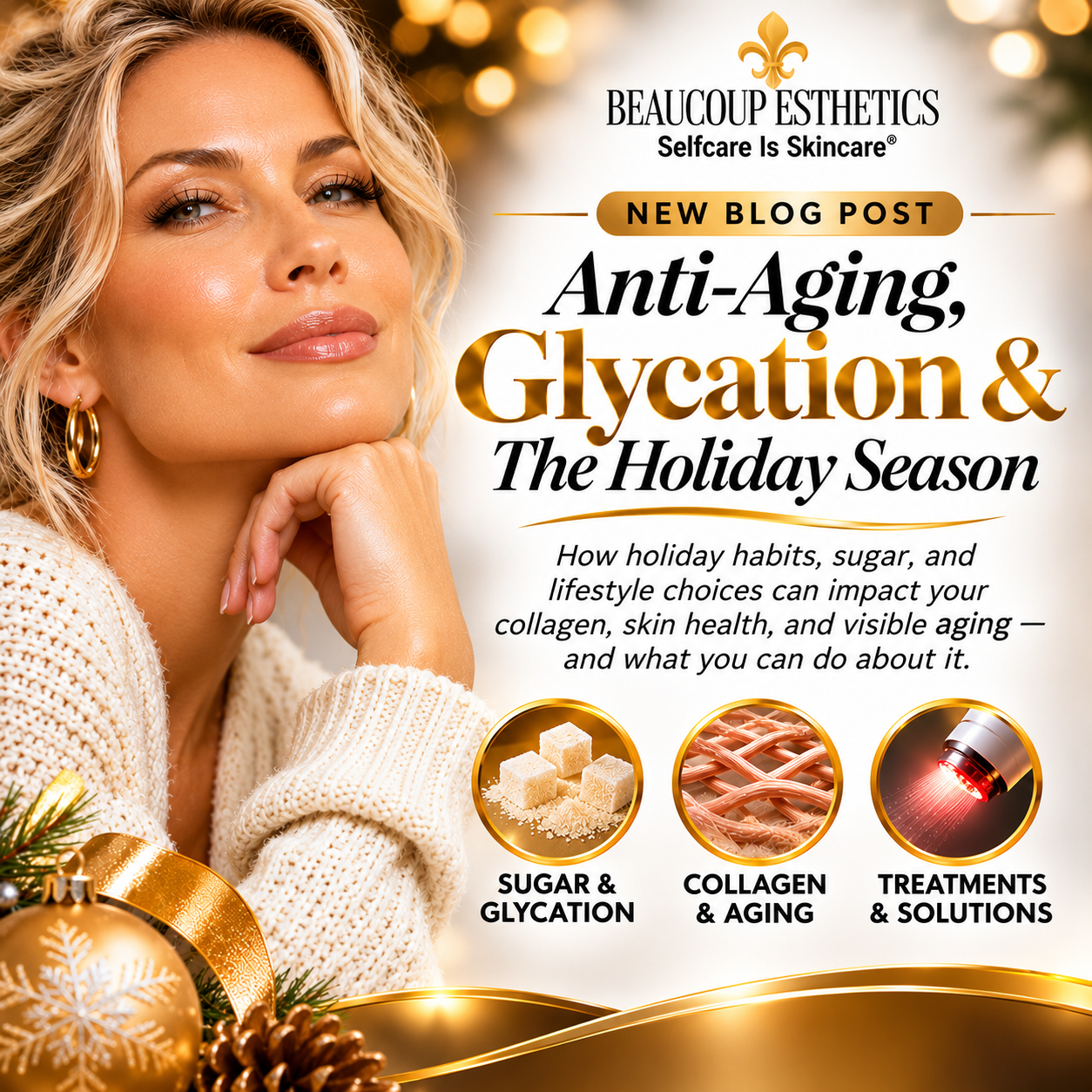
The holiday season is a time for celebration, family, food, travel, parties, and plenty of sweet treats.
But while we are enjoying the season, our skin may be dealing with something happening beneath the surface:
Glycation.
Glycation is one of the lesser-known processes that can contribute to visible skin aging. It happens when excess sugars in the body attach to proteins such as collagen and elastin, eventually forming compounds known as advanced glycation end products, or AGEs.
Over time, AGEs can contribute to collagen becoming stiffer and less flexible, while also increasing oxidative stress and inflammation in the skin. Research increasingly recognizes glycation as an important contributor to wrinkles, loss of elasticity, uneven pigmentation, and impaired skin repair. (PubMed)
That does not mean you have to skip Thanksgiving dinner or say no to dessert.
The goal is not perfection.
The goal is understanding what is happening in your skin so you can enjoy the holidays while still protecting your collagen.
What Exactly Is Glycation?
Think of collagen as the supportive framework that helps keep your skin firm, smooth, and resilient.
When excess glucose repeatedly interacts with collagen and elastin, those proteins can become chemically altered.
The resulting AGEs can create cross-links between collagen fibers, making them stiffer, more brittle, and less functional. Glycation can also contribute to oxidative stress and inflammatory signaling within the skin. (PubMed)
In simple terms:
Excess sugar + skin proteins → AGEs → damaged, less flexible collagen
Because collagen naturally declines and changes as we age, additional damage from glycation can make visible aging more noticeable.
How Can Glycation Show Up in Your Skin?
Glycation does not necessarily create one specific “glycation wrinkle.”
Instead, its effects can contribute to several signs we commonly associate with aging.
These may include:
• Loss of firmness
• Reduced elasticity
• Fine lines and wrinkles
• Dullness
• Rougher-looking texture
• Uneven skin tone
• Dyschromia or discoloration
• Slower-looking recovery from damage
Current dermatology literature associates glycation with wrinkles, laxity, dyschromia, and impaired tissue repair. (PubMed)
Why Talk About Glycation During the Holidays?
Because holiday routines can create the perfect storm for increased metabolic stress.
Think about a typical November and December:
Desserts at work.
Sweet holiday drinks.
Thanksgiving dinner.
Christmas parties.
More alcohol.
More refined carbohydrates.
Less sleep.
Travel.
Stress.
Less exercise.
More grazing throughout the day.
One holiday meal is not going to suddenly age your skin.
The bigger concern is the pattern.
Frequent blood-sugar spikes, highly processed foods, poor sleep, chronic stress, smoking, and other sources of oxidative stress may all contribute to an environment where glycation and skin aging are more likely to progress.
Emerging dermatology research continues to examine the relationship between nutrition, metabolic health, and the biological processes involved in skin aging. (American Academy of Dermatology)
Enjoy the Holidays Without Becoming Afraid of Sugar
This is important.
You do not need to spend Thanksgiving calculating what every bite is doing to your collagen.
Enjoy the pie.
Enjoy the macaroni and cheese.
Enjoy the dressing.
Enjoy the sweet potato casserole.
Food is also culture, tradition, celebration, and connection.
Instead of approaching glycation with fear, focus on balance.
Try eating your holiday carbohydrates alongside protein, vegetables, healthy fats, and fiber rather than eating sweets and refined carbohydrates continuously throughout the day.
Drink water.
Move your body.
Get back to your normal routine after the celebration.
And remember:
Your overall habits matter more than one plate of food.
Five Holiday Habits That Can Help Support Healthy Aging
You do not need an extreme anti-aging routine.
A few consistent habits can make a meaningful difference.
1. Be mindful of added sugar.
You do not have to eliminate sweets, but constant sugary drinks, desserts, and processed snacks can add up quickly.
Enjoy the things you genuinely love rather than grazing on sugar all day simply because it is available.
2. Add protein and fiber to your meals.
Protein, vegetables, legumes, whole grains, and other fiber-rich foods can help create a more balanced meal and reduce the tendency to eat large amounts of refined carbohydrates alone.
3. Eat antioxidant-rich foods.
Berries, leafy greens, colorful vegetables, herbs, tea, and other plant foods provide compounds that support the body’s antioxidant defenses.
Oxidative stress and glycation often interact, which is one reason antioxidant-rich dietary patterns are of interest in healthy-aging research. (PubMed)
4. Protect your sleep.
Late nights are part of the holidays, but chronic sleep deprivation can contribute to stress and inflammation.
Give your body opportunities to recover.
5. Keep moving.
A walk after dinner is simple, free, and realistic.
Physical activity supports overall metabolic health — and you do not need to turn Thanksgiving into a boot camp.
Anti-Aging Skincare Still Matters
Nutrition is only part of the aging conversation.
One of the most important things you can do to prevent premature skin aging remains consistent sun protection.
The American Academy of Dermatology recommends broad-spectrum, water-resistant SPF 30 or higher as a foundation of an anti-aging skincare plan because UV exposure accelerates visible skin aging. (American Academy of Dermatology)
Your holiday skincare routine does not need to become complicated.
A strong foundation may include:
Gentle cleansing
Antioxidants
Moisturizer
Retinoids when appropriate
Pigment-correcting ingredients when needed
Daily SPF
Retinoids are among the best-established topical ingredients for improving skin tone, texture, fine lines, and collagen support, although they should be introduced gradually because irritation can trigger hyperpigmentation in some people with deeper skin tones. (American Academy of Dermatology)
Do Not Destroy Your Skin Trying to “Reverse” Holiday Damage
January often brings what I call skincare panic.
Someone eats differently for several weeks, notices dullness or breakouts, and suddenly wants:
A peel.
Microneedling.
Retinoids.
Exfoliating pads.
Brightening products.
Scrubs.
And every serum in the cabinet.
All at once.
That is usually not the answer.
More products do not automatically mean better results.
The American Academy of Dermatology specifically cautions that using multiple anti-aging products together can irritate the skin. (American Academy of Dermatology)
Corrective skincare works best when it is structured.
Professional Treatments for Visible Skin Aging
Professional treatments cannot erase glycation from your entire body.
What they can do is help address some of the visible skin concerns associated with aging, collagen loss, pigmentation, and uneven texture.
Depending on your skin and goals, your corrective plan may include:
Microneedling
Microneedling creates controlled micro-injuries that stimulate the skin’s wound-healing response and collagen remodeling.
It may be used to improve the appearance of:
• Fine lines
• Acne scars
• Uneven texture
• Enlarged-looking pores
• Visible signs of collagen loss
Chemical Peels
Chemical peels can help remove damaged surface cells and support epidermal renewal.
Depending on the peel selected, they may help improve:
• Hyperpigmentation
• Uneven tone
• Dullness
• Texture
• Acne-related discoloration
• Visible signs of aging
Laser Treatments
Laser and energy-based treatments may be used to address pigmentation, texture, vascular changes, and other signs of photodamage and aging.
LED Light Therapy
LED therapy is often used as a supportive treatment for inflammation, recovery, and overall skin health.
RF Rejuvenation
Radiofrequency treatments use controlled energy to heat targeted tissue and may be used to support collagen remodeling and skin tightening.
Growth Factors, Peptides & Regenerative Skincare
These products are commonly incorporated into corrective skincare protocols to support hydration, barrier function, skin recovery, and the appearance of healthier skin.
The important distinction is that these treatments address visible skin aging and skin quality — they are not a substitute for addressing the lifestyle and metabolic factors that contribute to glycation.
What About “Reversing” Glycation?
This is where skincare marketing can get ahead of the science.
There is growing interest in treatments and ingredients that may reduce AGE formation, interrupt glycation-related pathways, or improve tissue affected by glycation.
However, current clinical evidence for specifically reversing existing glycation in human skin remains limited. The newest dermatology reviews describe lifestyle measures, topical therapies, systemic approaches, and energy-based devices as promising areas, while emphasizing that more clinical validation is needed. (PubMed)
So rather than promising to “erase glycation,” I prefer a more realistic goal:
Reduce ongoing damage.
Protect collagen.
Improve skin quality.
Support healthy aging.
Your Holiday Anti-Aging Strategy
This holiday season, think of anti-aging as more than a facial or serum.
Healthy aging is a combination of what you do inside and outside the treatment room.
Enjoy your holiday meals.
Drink your water.
Eat some vegetables.
Get your sleep when you can.
Move your body.
Wear your sunscreen.
Stay consistent with your skincare.
And let professional treatments complement those habits — not replace them.
At Beaucoup Esthetics: Correct, Protect & Maintain
At Beaucoup Esthetics, my approach to aging skin is not about trying to make you look twenty years old.
It is about helping your skin look healthier, brighter, smoother, more even, and better supported as you age.
That may mean improving pigmentation.
Rebuilding your barrier.
Supporting collagen.
Correcting texture.
Developing an effective homecare routine.
Or combining treatments strategically over time.
Because healthy aging is not about fighting your age.
It is about taking care of the skin you are aging in.
Beaucoup Esthetics
Selfcare Is Skincare®